Anxiety is one of the most common reasons people come to my classes — often without saying it out loud at first. They describe a tight chest, a churning stomach, a mind that rehearses worst cases at three in the morning. In my experience, what they’re describing is the body’s alarm system running without a fire, and it’s one of the things Kundalini genuinely helps with. I’d never claim it removes the causes of anxiety from your life. But it can give you two things that are truly within your control: tools that calm an acute spike in the moment, and a daily practice that makes the alarm quieter over time.
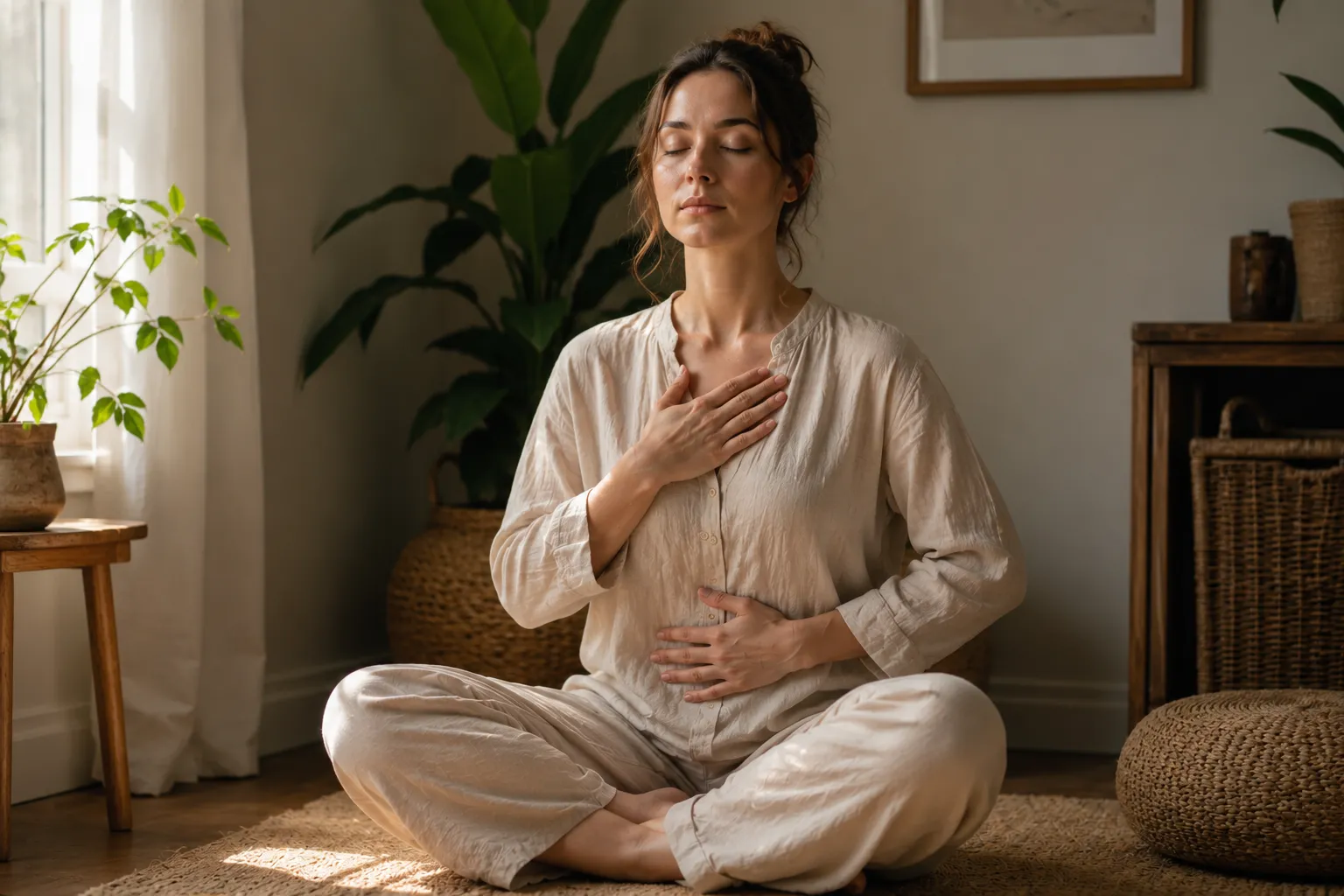
Anxiety Is Not the Same as Stress
Stress is a response to a real, present pressure — a deadline, a difficult conversation, a load that’s too heavy. Anxiety is different: it’s alarm without a clear threat, or worry that keeps running after the stress is gone. Stress says there’s something to deal with. Anxiety says, over and over, that something bad might happen — and your body believes it.
That difference matters, because it changes what helps. Stress relief can lean on action and planning. Anxiety needs to be met at the nervous system, where the false alarm keeps ringing.
Fight or Flight vs. Rest and Digest
Your nervous system is always choosing between two states. The sympathetic branch — fight or flight — is your alarm: it quickens the breath, raises the heart and narrows your attention onto threat. The parasympathetic branch — rest and digest — is your brake: it slows the breath, settles the heart and tells the body it’s safe to relax.
Anxiety is the alarm going off when there’s no fire. Kundalini’s tools don’t argue with the thought — they work on the alarm itself. Breathing and grounding practices press the brake, and with practice the alarm learns to stay quiet.
The evidence is direct: a 2020 crossover study measured state anxiety before and after a single 30-minute meditative yoga session in 13 women with no prior yoga experience and found it dropped significantly — from 33.4 ± 8.9 to 27.9 ± 5.4 on the State–Trait Anxiety Inventory (p = 0.047, medium effect d = 0.74) — while a 30-minute power yoga session changed anxiety scores not at all (p = 0.625) (Marshall et al., 2020). Even in mildly stressed women, the calm, breathing-first form of yoga was the one that delivered the acute anxiolytic effect. Longer-term, a review of the therapeutic literature reported that regular yogic practice is associated with increases in serotonin and decreases in monoamine oxidase and cortisol — neurochemical shifts in the same direction as many conventional treatments for mood disorders (Woodyard, 2011).
Tools for an Acute Anxiety Spike
When anxiety spikes — chest tight, breath shallow, thoughts spinning — you don’t need a routine. You need something that works in the moment.
Long Deep Breathing
Right where you are, begin to breathe slowly and fully — in through the nose, belly then chest, then a long, soft exhale. The exhale is the signal: each one tells the body the danger has passed. Even three or four minutes of long deep breathing is enough to shift the balance.
Alternate Nostril Breathing
Alternate nostril breathing (Nadi Shodhana) is a known calm-starter. Close the right nostril with your thumb, breathe in slowly through the left; close the left, breathe out through the right; breathe in right, out left; and continue the cycle. Keep it slow and smooth. If it feels like too much during a sharp moment, long deep breathing alone is enough.
Daily Regulation: Building a Calmer Baseline
Acute tools put out the fire. Daily practice makes fewer fires start. Three Kundalini pillars do this well:
- Breath of Fire. A rhythmic, active breath through the nose, powered by the navel — equal in and out, about two to three breaths a second. It clears the mind and releases the tight, stuck energy anxiety leaves behind. Learn it with a live teacher first; in my classes we always start slow.
- A grounding kriya. Short, seated sequences of spinal movement, breath and focus settle you in your body and out of your head. Consistency matters more than length: ten focused minutes daily beats an occasional long session.
- Mantra. A simple chant — Sat Nam, for instance — gives the wandering mind one steady thing to hold. Repeating it through a breathing practice is like putting a quiet anchor down in choppy water.
When to Seek Professional Help
Let me be direct, the way I’d want a teacher to be with me. If anxiety is frequent, intense, or interfering with your work, sleep or relationships, please speak with a doctor or therapist. Yoga is a powerful companion, not a replacement for treatment. In my own teaching, I’d rather a student tell me “I’m seeing a professional, and I practice alongside it” than hear that someone tried to out-practice a medical condition. Both belong in your corner.
Start With a Free Trial
The most honest way to learn these tools is to practice them with someone watching your rhythm, your pace and your limits. Book a free trial online Kundalini class, or read more on breathwork for the nervous system and yoga for stress and anxiety. If anxiety keeps you up at night, the before-bed routine for sleep was written with exactly that mind in mind.
Sources
- Woodyard C. Exploring the therapeutic effects of yoga and its ability to increase quality of life. Int J Yoga. 2011;4(2):49–54. PMC article.
- Marshall M, McClanahan M, McArthur Warren S, Rogers R, Ballmann C. A comparison of the acute effects of different forms of yoga on physiological and psychological stress: a pilot study. Int J Environ Res Public Health. 2020;17(17):6090. PMC article.
Read next: Kundalini Yoga for Stress and Anxiety — How Breath Calms the Nervous System