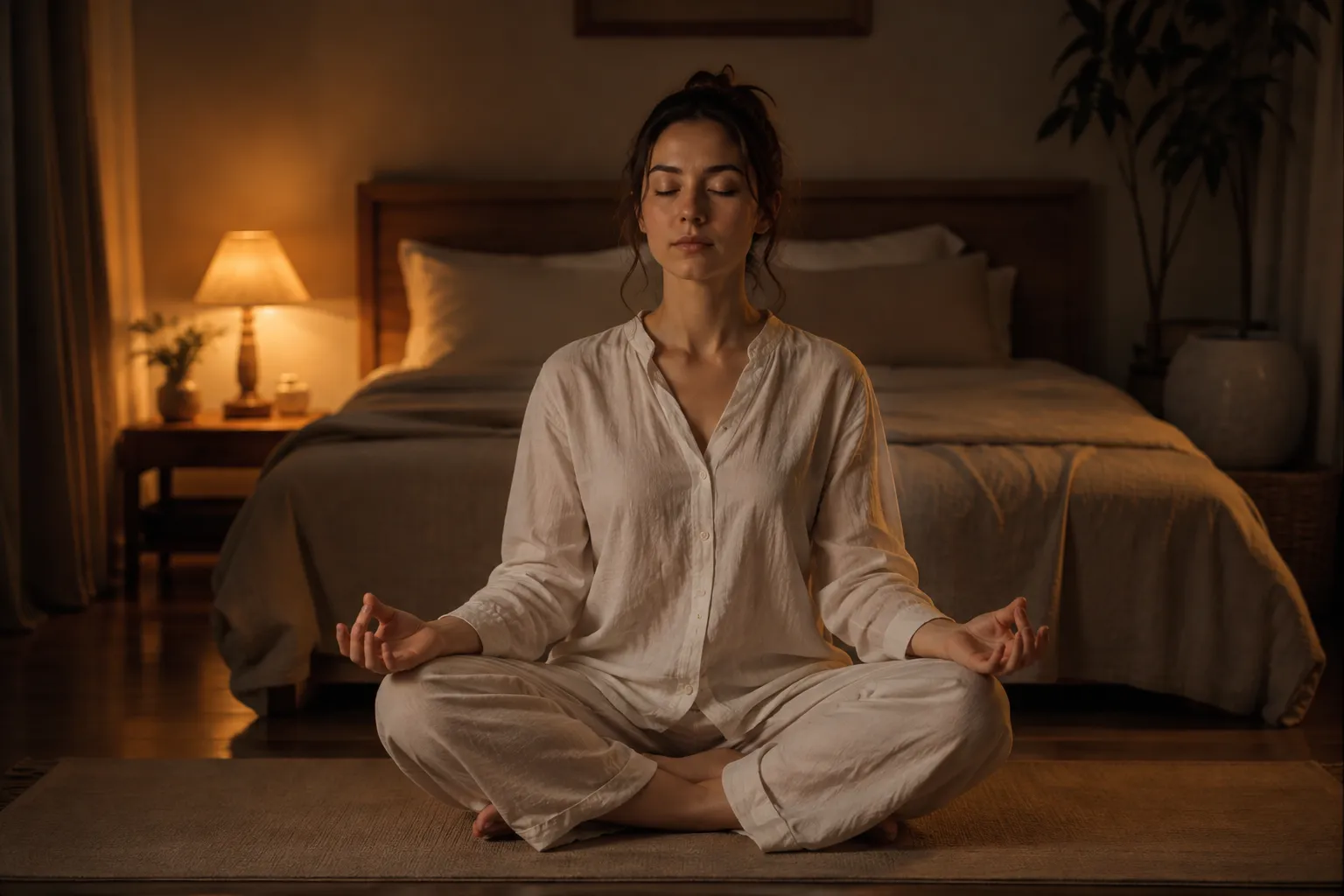
The hardest part of a bad night isn’t the night itself — it’s the half hour before it, when you finally lie still and every thought you’ve been outrunning all day catches up. I’ve heard this described so many times by students that I could almost recite it from memory. The body is exhausted, but the mind is wide awake. Yoga can’t force sleep, and I won’t pretend it can. But Kundalini gives you something almost as useful — a way to tell your nervous system, clearly and repeatedly, that it’s safe to slow down.
Why Your Mind Races at Night
During the day you can outrun your thoughts — work, conversation, screens. At night, with nothing to do and nowhere to go, the mind finally has room, and it uses it. Racing thoughts at night are rarely about the thought itself. They’re a sign that your body still believes it needs to be alert. The question isn’t how to silence the thought; it’s how to convince the system underneath it that the day is over.
Arousal vs. Sleep: What Your Nervous System Actually Needs
Sleep isn’t something you make happen; it’s something you let happen. Your nervous system has two main states — the sympathetic branch (arousal, alertness, “on”) and the parasympathetic branch (rest, digestion, “off”). Falling asleep requires the off switch. The trouble is that modern evenings — bright screens, packed schedules, caffeine well past noon — keep the on switch held down.
Kundalini’s value for sleep is that it works on this switch directly. It’s not about doing less; it’s about doing a specific, gentle sequence that tells the body it’s safe to shift gears. Long exhales, slow spinal movement and deep relaxation are all signals the parasympathetic system recognizes.
There is published evidence behind all three. A review of yoga’s therapeutic effects in the International Journal of Yoga describes how yogic practices increase relaxation, induce a balanced mental state and shift the nervous system toward the parasympathetic “relaxation response,” which lowers breathing and heart rate, reduces blood pressure and decreases cortisol — the same arousal chemicals that keep the mind running at night (Woodyard, 2011). The review also summarizes clinical trials in which regular yoga practice led to a significant decrease in the time taken to fall asleep, an increase in the total number of hours slept, and a greater feeling of being rested in the morning — with effects on sleep patterns also reported in clinical populations such as patients with lymphoma.
Kundalini Tools for Sleep
Long Deep Breathing
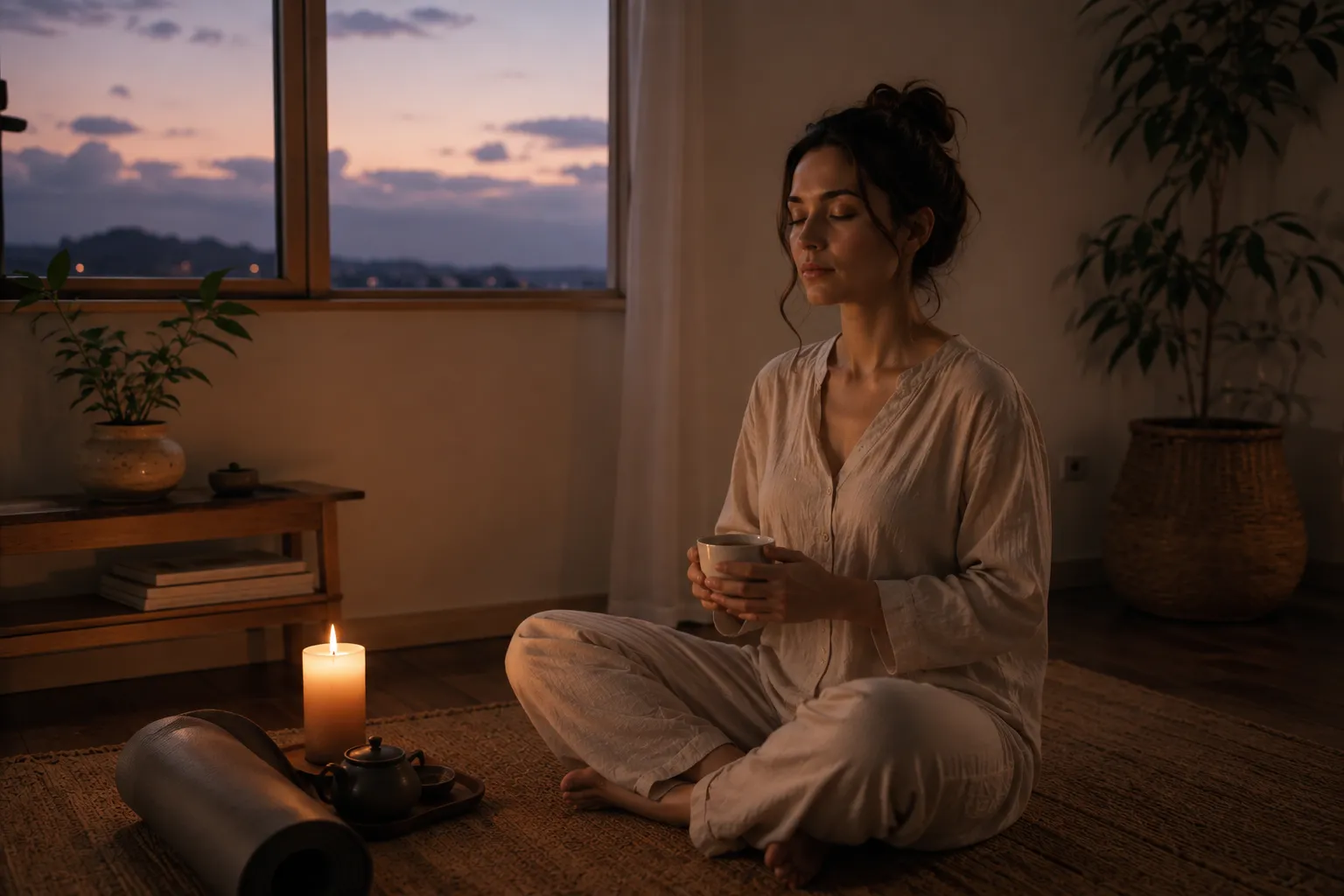
Slow, full breathing — inhale from the belly through the chest, then exhale long and soft — is the simplest off-switch I know. The exhale is the key: each long exhale nudges the heart rate down and tells the brain it’s safe. In Kundalini we practice it seated, spine tall, at a rhythm you can keep for ten minutes without strain.
Gentle Spinal Flexes
You don’t need strength at night; you need movement that unwinds. Gentle spinal flexes — sitting tall and slowly curling the spine forward and back with the breath — release the tension the day stored in your back and shoulders. Slow, small, rhythmic. Nothing that raises your heart rate.
Sleep Meditation
Kundalini meditation for sleep usually pairs a slow breath with a soft focus — a mantra or a simple image. The point isn’t to empty the mind (you can’t, at night) but to give it one gentle thing to hold instead of forty racing ones.
Deep Relaxation
Every Kundalini class ends lying down, and for good reason. In deep relaxation you release the body completely — jaw, shoulders, hands, hips — and let the breath slow on its own. This is the closest thing yoga has to a direct instruction for the nervous system: “rest now.”
A 10-Minute Before-Bed Sequence
Here’s the sequence I recommend when the day is ending and the mind is still running. Ten minutes, all of it gentle. Do it in bed or on a mat, in dim light.
- 2 minutes — Long deep breathing. Lie on your back or sit comfortably. Breathe in through the nose, belly then chest; out slow and long. Let each exhale be longer than you think it needs to be.
- 3 minutes — Gentle spinal flexes. Sit cross-legged (or on a chair). Inhale as you gently curl the spine forward, chin toward chest; exhale as you sit tall. Small, slow, continuous — let the movement follow the breath.
- 2 minutes — Seated breathing, eyes soft. Return to long deep breathing, but now focus your eyes softly downward and let the exhale grow even longer. When a thought comes, notice it and return to the breath.
- 3 minutes — Deep relaxation. Lie down, legs slightly apart, palms up, a blanket nearby if you’re cool. Scan the body from the face down, releasing each part. Stay here and let sleep meet you.
An Honest Word About Chronic Insomnia
I want to be honest with you, because sleep content is full of false promises. If insomnia has lasted for months, or you wake exhausted no matter what you do, yoga alone is probably not the answer — and you deserve a better answer than “just relax.” What helps many people is combining a gentle evening practice with daytime routines and, where needed, real medical advice. Think of this sequence as one useful tool, not a cure. If you’re in that situation, please talk to a professional — and keep practicing. They’re not in conflict.
Take the First Step
Our evening Kundalini classes are built around exactly this kind of wind-down — calming kriyas, pranayama and deep relaxation, ending with your body already half-asleep. Book a free trial and join a live online Kundalini yoga class in the evening. If the night mind spins on worry rather than on general noise, you’ll also find Kundalini tools for anxiety useful — and for the daytime version of this, read how breath calms the nervous system. Before bed, you can also release physical tension with gentle yoga stretches or settle the mind with mindfulness exercises.
Sources
- Woodyard C. Exploring the therapeutic effects of yoga and its ability to increase quality of life. Int J Yoga. 2011;4(2):49–54. PMC article.
Read next: Kundalini Yoga for Anxiety — Acute Tools and Daily Regulation